
Service Learning Project
Tuesday, April 12, 2011
Sam Myers: SLP Success
Upon completing our SLP projects at the dorms, I realized that my group and myself overthought alot of the complications or conflicts that could have kept us from having such a great turnout. The biggest thing that comes to mind is the concern that we had about attendance at the event. We estimated to have around 20 people or so. We had that many lined up at the door before the project began! There are certain factors that I did not really consider, but after looking back I understood that we had many assets working with us. For example, the fact that we had it at a girl’s dorm and it included little fluffy animals. That should have told me from the start that we would have people show up. Being involved on campus, I am used to having events like this and not having a large number of people come. I quickly came to realize that there are many students in the dorms that may not have the time or the outgoing personalities to rush out and get involved in clubs and community service projects. This was relevant when over 100 people showed up and they were excited to be there. Another was the help we had from the RA’s. They stepped up and took a big role to help advertise and kept the program running smoothly throughout the night. They understood that my group was in charge and let us do our jobs. All of these compiled to make my groups SLP project an extreme success!

Sunday, April 10, 2011
As the blogging sessions of a BlogHog come to a close, I just want to say thanks to my group members for being great team mates for this wild rollercoaster through Com320. What a great time we had together: laughing, joking, emailing, frustration, and even helping Natalie. It was a wonderful time for me and I learned a lot about myself. As a result of this class, I believe my role as a group member has definitely changed. My organizational skills have led me in the past to have roles such as note taker. All roles are important:

While notetaking is an important role, it is a much quieter role. I think this is partly due to my introvert personality and indecisiveness. I have definitely grown as an individual and am becoming more of an extrovert. As a result, I am taking on roles such as project manager and many of my semester projects.
Pictures from Puppies and Puppy Chow:
And a video from the event:
Aren't these cute dogs? Natalie had 6 dogs, and some of them looked like this :)


Our service learning project went very well. We had six lovable cute dogs to be played with 130 Purdue students. To pinpoint the one major obstacle that we overcame to make this group project successful would have to be the misunderstanding of others. One important aspect that was a misinterpretation throughout the planning of our service learning project was non-verbal communication. As discussed in Wednesday's class, a key element to enhancing group communication skills is to adequately assess all of the non-verbals. Through emails, blogging, social media updates, and phone conversations, non-verbal communication cannot take place. I believe non-verbal communication helps express feelings, values, and beliefs. Without knowing these elements, communication can be difficult.
In order to get in contact with Natalie, Sam primarily texted her, as this was her choice of contact. In addition, in order to put on this event through Windsor Residence Hall, the RA's had to "sponsor" us. The primary form of communication between the RA's and I as email. I think location confusion as well as other important details could have been clarified with face interaction. The problem is everyone has hectic schedules and coordinating six or more people to gather in one place is very difficult and often impossible. What better way than to use technology innovations for interaction. But wait, that brings us back to our first concern: lack of face interaction. As a student in Computer Technology, I think our goal should be to incorporate technology, while still using face interaction. This is starting to be implemented with Skype. In time, voice and face recorded emails and voicemails will be implemented.
A Wrap-up
1. Non-Verbal Communication and Face Interaction is Important


2. Our Service Learning Project Went Well

3. Group Roles Change between Groups and with Time

*Everyone must do their equally important part(depicted by a colored puzzle piece) which will be different for each project or group
-Amy Lohrman
End of the Semester
The end of the semester is near and our service learning project was a success. We had a number of people show up and it was a huge surprise. We were able to raise an enormous amount of donations, it was a lot more than we had expected. It was very exciting that it turned out so well. Hopefully, we were able to raise awareness of Natilie's Second Chance animal shelter and find volunteers to help her.
There is just about a few more weeks of school left. After taking this course, I've learned to be a better communicator and will become more of a leader in any future group or team that I encounter. Taking this course has helped me feel more confident to speak up more often. As a better communicator, I can have more influence, communicate more effectively and be able to contribute more to my group's success. Communication is the key to sharing messages and collaborating with others. Being a truly competent communicator will help me in the future if I ever get a career that require working in a team, communicating well with others, or take on a leadership role.
-Victor
There is just about a few more weeks of school left. After taking this course, I've learned to be a better communicator and will become more of a leader in any future group or team that I encounter. Taking this course has helped me feel more confident to speak up more often. As a better communicator, I can have more influence, communicate more effectively and be able to contribute more to my group's success. Communication is the key to sharing messages and collaborating with others. Being a truly competent communicator will help me in the future if I ever get a career that require working in a team, communicating well with others, or take on a leadership role.
-Victor
Thursday, April 7, 2011
Blogging and Social Media

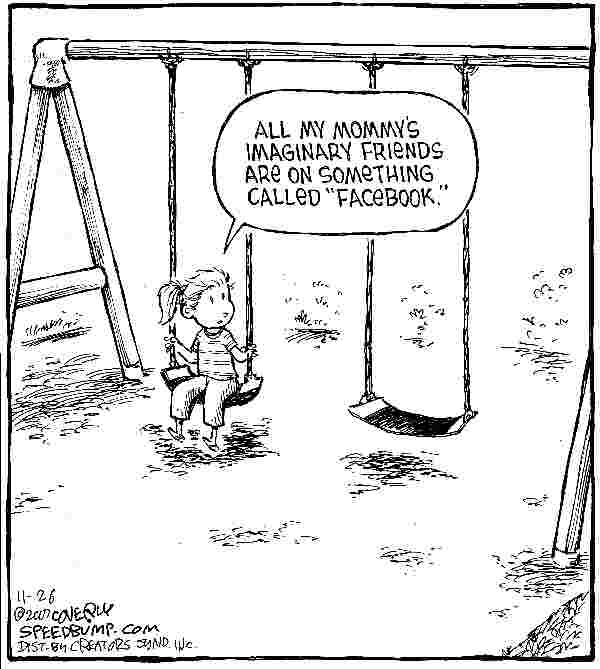
Sites such as Facebook and Blogger are great tools if used under the right pretenses and in moderation, but today's rapidly changing world is converting the old fashioned face-to-face conversation with an endless slew of Facebook and blog comments. Not only are a great deal of these rants, raves, and audienceless complaints, but they are often misinterpreted by the receiver. It is sad to think that the day has arrived where I have some friends from high school who would rather be contacted via Facebook than go out for dinner when we are both in town. Social media has exploded within the past few years; if you are interested in this phenomenon, this website (http://blog.hubspot.com/blog/tabid/6307/bid/6128/The-Ultimate-List-100-Facebook-Statistics-Infographics.aspx) is a required read. It is fascinating to see how many users access such sites and how much new content is added on a daily basis.
My reason for writing this blog is not to air out a grievance I have with Facebook, nor is it a whine session meant to attract sympathy. It is a plea for those who are addicted to social media to have more face-to-face conversations and include the "human element" back into their communications. Arguments erupt within families because of the generational gap and the older generations become active on such sites. Friends turn against each other because of a misinterpreted comment. Think before you post. Think of the implications that each and every post could bring if misinterpreted.
Even though this project has been enlightening and educational, I think that real conversation should be advocated within modern communications classes. I understand that times are changing, but interaction between people will always remain the same, why tether such a precious style of communication to something as impersonal as the internet?
Sunday, April 3, 2011
Emergency Task Force
This past weekend, each person got placed in a new group to work out the details of an emergency plan of action for a specific group affected by the earthquake and tsunami in Japan. Each person had to go through the stages of group forming again. Although this time it seemed more simple since we had all been in the same class for over half a semester now. That allowed everyone to know more about each other than when we first got placed in groups in class. This activity showed how fast you may need to take action and how much help it would be to prepare for these types of things ahead of time in order to reduce the amount of panic.
One example of something other than a natural disaster that requires quick thinking and a planned attack is a SWAT team. I realized this the other day when the floor on my dorm had the chance to go to the Purdue Police Department and talk to one of the guys on the SWAT team. It was a very fun time getting to see all of their equipment and talk a little about their training.
The beginning of this clip shows a little bit of the quick thinking and training that a SWAT team may do. This is from the movie S.W.A.T.
http://www.youtube.com/watch?v=tLhMJFw5HVQ
Matt
One example of something other than a natural disaster that requires quick thinking and a planned attack is a SWAT team. I realized this the other day when the floor on my dorm had the chance to go to the Purdue Police Department and talk to one of the guys on the SWAT team. It was a very fun time getting to see all of their equipment and talk a little about their training.
The beginning of this clip shows a little bit of the quick thinking and training that a SWAT team may do. This is from the movie S.W.A.T.
http://www.youtube.com/watch?v=tLhMJFw5HVQ
Matt
Group Dynamics
Everyone did not know each other when our small group was assigned in the beginning of the semester. Contact information and email addresses were exchanged but communication was very short. My group members and I were not comfortable speaking because none of us knew how to communicate to one another. We were more focused on getting our task completed than getting to know each of our group members.
When we were assigned to a new group to work on an assignment in wake of the Japan crisis, the group dynamics that quickly formed were similar to our primary group. The assignment was to form an evacuation plan to evacuate everyone from Fukushima where power plants were emitting cancer causing radiations. We were given a problem, and in a short amount of time our group came up with ideas, and selected the best choice to solve the problem. In any group, a group is organized to work together to achieve a common specific goal. In this case, to solve the problem, our group worked together to help save the citizens of Japan.
-Victor
When we were assigned to a new group to work on an assignment in wake of the Japan crisis, the group dynamics that quickly formed were similar to our primary group. The assignment was to form an evacuation plan to evacuate everyone from Fukushima where power plants were emitting cancer causing radiations. We were given a problem, and in a short amount of time our group came up with ideas, and selected the best choice to solve the problem. In any group, a group is organized to work together to achieve a common specific goal. In this case, to solve the problem, our group worked together to help save the citizens of Japan.
-Victor
Saturday, April 2, 2011
Sam Myers: Fraternity Recruitment
After being in a Fraternity for three years here at Purdue, I have found that recruitment is the lifeblood of any organization. On top of this, you must truly consider the type of people you wish to communicate to. One must always remember that people do not join organizations, people join people.
The most essential step in persuading or recruiting any person are communication and realizing that different techniques are necessary for different types of people. For example, a student that does not drink alcohol would not be sold on joining a fraternity that prides itself on the crazy parties it throws. Likewise a student that wishes to have functions every night will more than likely not join a dry fraternity house.
A very important aspect is speaking with the parents of the students that wish to have membership in a fraternity. You must know how to effectively and honestly communicate to parents when questions arise, which are typically about the stereotypes that fraternities often recieve. The only thing that people hear about are when accidents happen because people are being irresponsible. Rarely do you hear about how many millions of dollars greek houses raise per year for cancer or how many countless hours of community service greeks participate in. You must make sure that you send the right vibes to the parents, both mentally and physically. All of these different communication types are present in COM 320, which helps alot when speaking and reading peoples actions throughout the recruitment process.
The most essential step in persuading or recruiting any person are communication and realizing that different techniques are necessary for different types of people. For example, a student that does not drink alcohol would not be sold on joining a fraternity that prides itself on the crazy parties it throws. Likewise a student that wishes to have functions every night will more than likely not join a dry fraternity house.
A very important aspect is speaking with the parents of the students that wish to have membership in a fraternity. You must know how to effectively and honestly communicate to parents when questions arise, which are typically about the stereotypes that fraternities often recieve. The only thing that people hear about are when accidents happen because people are being irresponsible. Rarely do you hear about how many millions of dollars greek houses raise per year for cancer or how many countless hours of community service greeks participate in. You must make sure that you send the right vibes to the parents, both mentally and physically. All of these different communication types are present in COM 320, which helps alot when speaking and reading peoples actions throughout the recruitment process.
Subscribe to:
Posts (Atom)